
Conquering Mount Kenya: A 4-Day Ascent Guide to Africa’s Second Highest Peak
Conquering Mount Kenya: A 4-Day Ascent Guide to Africa’s Second Highest Peak
Imagine standing at the base of a massive mountain, trees hiding its peaks in clouds, knowing you’ll push your body to the limit in just four days. That’s how our Mount Kenya ascent kicked off. As Africa’s second tallest peak after Kilimanjaro, this mountain draws adventurers ready for a real test. We chose a tight 2.5-day climb up and 1.5 days down, skipping the slower six-day paths that help with altitude sickness. This fast pace amps up the challenge but cuts the overall trip short.
Setting the Stage for Mount Kenya Ascent
Mount Kenya towers at 5,199 meters, with its rugged trails and stunning views. We arrived full of excitement mixed with nerves, spotting the crew right away. The guides and porters smiled as they checked our gear. Our plan felt bold—we’d hike the full route without shortcuts like driving to camp.
“Every Step Tested Us, Every Summit Rewarded Us”
Day One: Naro Moru Gate ? Met Station
Elevation Gain: 9 km of steady uphill
We began at Naro Moru Gate, choosing to walk every step instead of driving part of the route. The early trail felt like a steady road walk—misty, cool, and calm.
Wildlife encounters
-
Baboons jumping between branches
-
Waterbuck and antelope grazing
-
Fresh elephant and buffalo signs
The daily rains hovered in the clouds, but we kept pace.
Met Station: A Surprisingly Comfortable Base
The biggest surprise? No tents—we slept in cabins with mattresses, warm lighting, and charging outlets.
We were welcomed with:
-
Hot drinks
-
Popcorn & cookies
-
A cozy fireplace
Monkeys lurked outside, so doors stayed locked. A gazebo and picnic tables made the area unexpectedly charming.
Dinner
Chef Dan delivered a hearty meal of roasted potatoes, fish in sauce, and vegetable sides. “Mountain Starbucks”—my hot chocolate + instant coffee mix—gave the final boost.
Night was peaceful. Warmer than expected. A good start.
Day Two: The Toughest Day — 1,500m Altitude Gain
Distance: 11 km · Time: 6 hours
This was the big one—our steepest single-day climb ever.
Breakfast was heavy (porridge, toast, tea) and necessary. Packs on, nerves rising, we stepped into higher altitude.
The Terrain Changes
Soon the road ended and the real trail began:
-
Muddy slopes
-
Uneven steps
-
No flat sections
-
Temperature dropping
-
Oxygen thinning
We kept a “pole-pole” (slow) pace—45–50 minutes per kilometre.
Breaking the Tree Line
Trees faded into open alpine landscapes. At the first major viewpoint, clouds swirled below as Mount Kenya rose ahead.
Samson called it his office.
We called it breathtaking.
Lunch Above the Clouds
At 1,000 metres of elevation gain, we paused for a carb-loaded lunch: chapati, bananas, chicken, and even a cheese–peanut butter sandwich. Strangely delicious at altitude.
We pressed on with renewed energy.
Arrival at Mackinder’s Camp (4,300m)
The lodge appeared like a miracle at the end of a brutal day. We dropped bags and collapsed into chairs, boots still on. This day was tougher than any Kilimanjaro segment—uphill almost the entire time.
Dinner was simple spaghetti—perfect at altitude.
The cabin slept up to 20, though fewer trekkers joined us.
Diamox, the altitude drug, kicked in—meaning multiple bathroom trips at night.
We prepped gear and tried to calm our nerves for the 2:30 AM wake-up.
The Summit Push: Point Lenana at Dawn
Start time: 2:30 AM · Temperature: below freezing
We woke to mochas and cookies, layered lightly (sweat = cold), and stepped into total darkness.
The trail was empty—unlike Kilimanjaro’s crowds.
The cold bit through gloves.
Wind howled.
One hour in, exhaustion hit. Nausea came and went. Our guide moved quietly but steadily ahead.
The Final 30 Minutes
Pure grit.
A constant chant in our heads kept the rhythm.
Every stop meant freezing instantly—so we barely stopped.
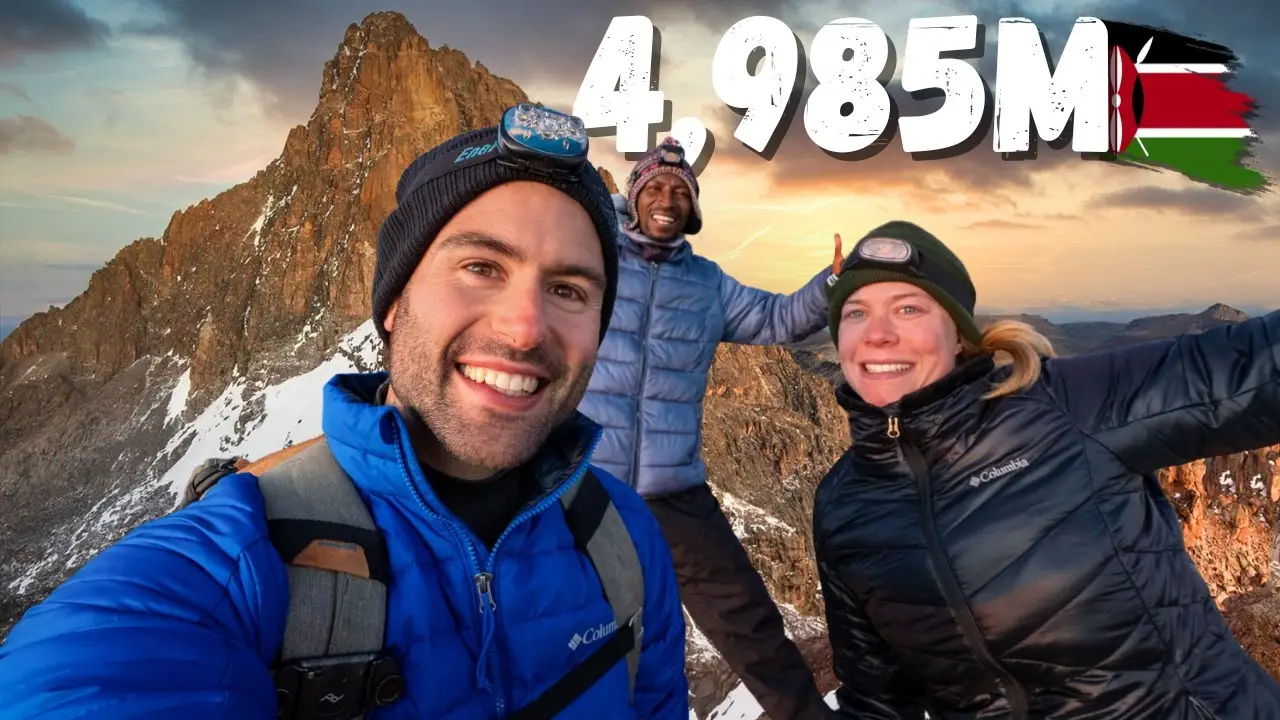
Summit Moment: Point Lenana (4,985m)
We made it.
Africa’s second-highest trekking summit.
A mix of tears, joy, and freezing fingers.
We stayed only 10 minutes—the wind was unforgiving.
Sunrise Descent: The Most Beautiful Part of the Climb
As we descended, the sky exploded in orange and gold.
Mountains glowed.
Clouds looked like oceans below us.
Easily one of the most magnificent sunrises we’ve seen anywhere in the world.
Descent to Shipton’s Camp and Beyond
Breakfast at Shipton’s was bliss—porridge, bread, hot drinks, even “banana fries.”
We continued down through the Sirimon Route, passing dramatic valleys and sweeping landscapes.
Porters flew past us—true mountain machines.
The last uphill ridge shocked us (we thought it was all downhill!), but it only lasted 14 minutes. Old Moses Camp came into view just as rain finally hit.
Flushing toilets felt like luxury.
Reflections: The High, The Low, The Truth
Summit euphoria is real—but short.
Cold winds and exhaustion pull you back to earth quickly.
The descent reminds you how tough this mountain truly is.
But the growth, the discipline, the pride, the views—worth every step.
Conclusion: Mission Complete
We wrapped the expedition with Chef Dan’s best meal yet, thanked our incredible team—Samson, Addison, Robert, Maurice—and drove to Nanyuki for rest.
After four years living in Kenya, this climb was the grand finale we didn’t know we needed.
This is not just a guide—it’s a testament to Mount Kenya’s power, beauty, and the strength found in pushing beyond comfort.
If you plan your own adventure, choose a professional crew.
They make the mountain safer, the journey smoother, and the memories richer.

All Categories
Recent Posts

Finding My Wild Heart: Why Mtalii Bushcamps Feels Like Coming Home

Backpacking in Nanyuki: Your Ultimate Guide to Kenya’s Adventure Hub

Turbulent History of Nanyuki, Kenya’s Town of Two Worlds
Quick booking process
+254 718 045 868
